

Content pillars for social media help businesses organize their posts around a few consistent themes that match their audience’s interests, answer customer questions, and support business goals. Instead of publishing random updates whenever an idea comes to mind, you can use content pillars to create a clear, repeatable social media strategy.
For businesses in Bangladesh, this approach can make content planning more manageable. Whether you run a clothing boutique, restaurant, online shop, coaching center, beauty salon, or digital marketing agency, having defined content themes helps you decide what to publish, why it matters, and how each post connects to your brand.
For example, a Bangladeshi clothing brand could focus on outfit inspiration, fabric information, styling advice, and ordering guidance. Each theme provides ideas for Facebook posts, Instagram Reels, short videos, product photographs, and customer questions.
The goal is not simply to publish more content. It is to publish useful, relevant content consistently.
In this guide, you will learn what content pillars are, how to make content pillars for your business, and how to use practical examples of content pillars for social media to develop a more organized content strategy.
What Are Content Pillars for Social Media?
Content pillars for social media are broad, recurring subject areas that define what your business regularly discusses online. Each pillar contains smaller topics that provide useful information, demonstrate your expertise, or help customers understand your products and services.
Think of a content pillar as a main category and individual posts as the specific ideas within that category.
For example, imagine you operate an online clothing store in Bangladesh. You might create a pillar called “Fabric and Clothing Care.” Under this theme, you could publish posts about washing cotton clothes, choosing suitable fabrics for different occasions, storing traditional outfits, and maintaining clothing quality.
All these posts serve the same broad subject while addressing different customer questions.
A content pillar should be broad enough to generate multiple ideas but specific enough to give your content a clear direction.
The same principle applies to almost any industry. A restaurant might focus on menu highlights, food preparation, customer experiences, and ordering information. A coaching center might cover study techniques, subject explanations, exam preparation, and admission guidance.
These recurring themes help customers understand what your brand offers and what they can expect from your social media accounts.
Why Are Content Pillars Important for Businesses in Bangladesh?
Content pillars provide a practical foundation for organizing social media marketing. They help businesses make better use of their time while keeping their content relevant to the people they want to reach.
Here are the main benefits.
1. Make Content Planning Easier
Without a clear strategy, you may spend too much time deciding what to post every day. Content pillars provide a starting point for generating ideas.
For example, an online clothing store can prepare topics around styling, product details, clothing care, and customer questions. Whenever the business needs a new post, it can select a topic from one of these categories.
2. Build a Consistent Brand Identity
Your content communicates what your business knows, sells, and values. Publishing around consistent themes helps people recognize the subjects associated with your brand.
A fitness studio, for example, could regularly discuss workout techniques, exercise routines, equipment guidance, and membership information. These themes give its social media presence a recognizable focus.
3. Answer Common Customer Questions
Customers often need information before making a purchase. They may want to know about product sizes, prices, delivery options, service details, or how to use a product.
Content pillars help you turn repeated questions from Messenger conversations, comments, customer calls, and reviews into useful posts.
For a Bangladeshi online store, a post explaining how customers can check product sizes or confirm delivery details may be more useful than another generic promotional graphic.

4. Support Different Business Goals
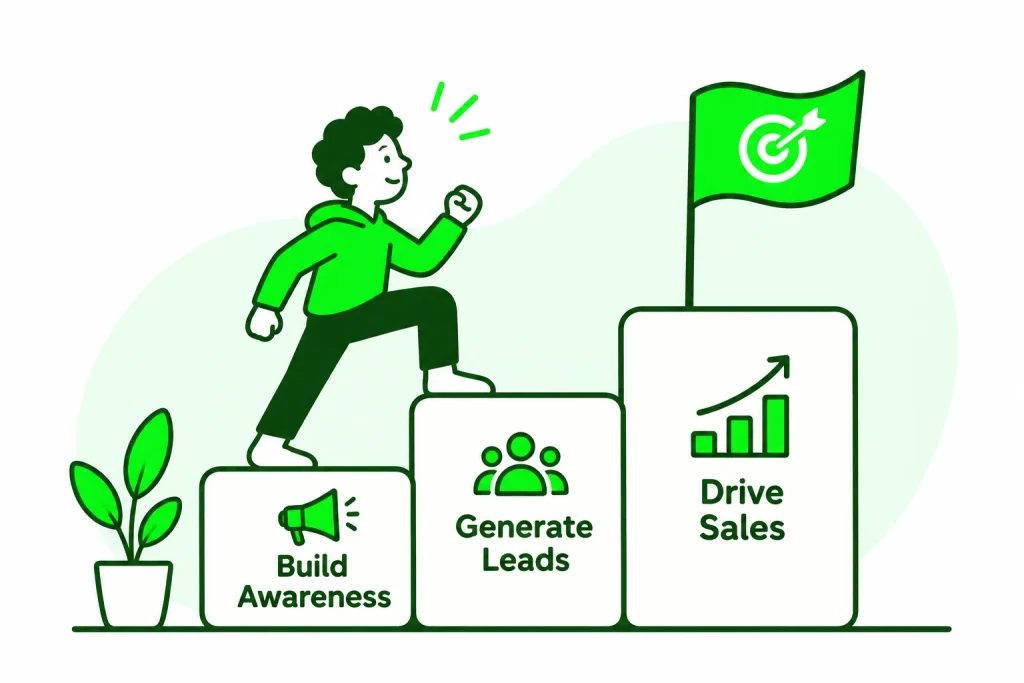
Not every social media post needs to generate an immediate sale. Some posts introduce your brand, others educate potential customers, and some help people compare options or complete an order.
A structured content strategy allows you to cover these different needs without making every post look like an advertisement.
5. Simplify Content Calendar Management
Content pillars make it easier to organize upcoming posts, assign tasks, and identify gaps in your content.
You can see whether your calendar contains too many promotional messages, whether customers are receiving enough useful information, and which subjects deserve more attention.
The result is a more intentional approach to social media marketing.
Content Pillars vs. Topics, Formats, and Content Goals
Before creating your strategy, it is important to understand the difference between a content pillar and an individual post idea.
These terms are related, but they do not mean the same thing.
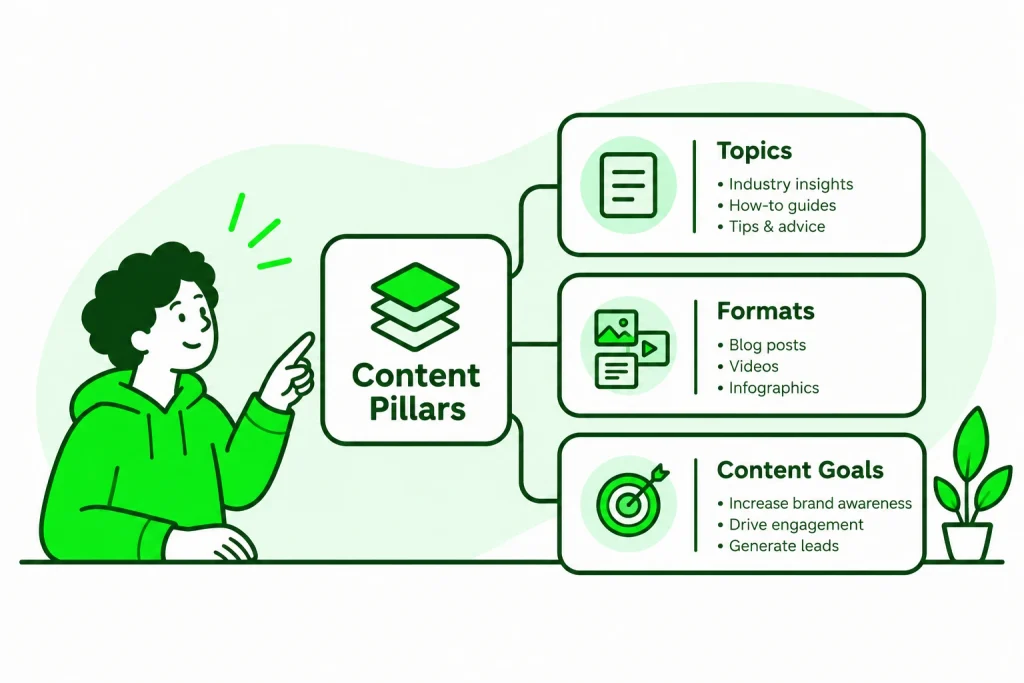
| Term | Meaning | Example for a Bangladeshi clothing shop |
|---|---|---|
| Content pillar | A recurring subject area | Fabric and clothing care |
| Content topic | One specific idea within a pillar | How to care for cotton panjabis |
| Content format | How the information is presented | Facebook carousel or Instagram Reel |
| Content goal | What the post should achieve | Educate customers about product care |
| Content calendar | A schedule of planned posts | A weekly publishing plan |
For instance, “Instagram Reels” is a format, not a content pillar. You can create Reels about product demonstrations, styling tips, customer questions, or behind the scenes activities.
Similarly, “promotion” describes the purpose of a post rather than necessarily defining the subject you regularly discuss.
A strong content strategy uses meaningful subject areas and then selects suitable topics, formats, and goals for each post.
How Many Content Pillars Should a Business Have?
Three to five content pillars are a practical starting point for many businesses with one main audience and a manageable publishing schedule. However, there is no universal number that every business must follow.
Your ideal number depends on your products, customer needs, resources, and publishing capacity.
A small Facebook shop with a narrow product range may need only three distinct pillars. A larger company that serves different customer groups may need additional themes.
Consider these starting points:
| Business situation | Suggested starting point | Planning priority |
|---|---|---|
| Small online shop | 3 pillars | Cover product information and customer questions |
| Local service business | 3 to 4 pillars | Explain services, expertise, and customer decisions |
| Growing retail brand | 4 to 5 pillars | Cover product selection, usage, and customer experience |
| Business with different audiences | Separate or expanded themes | Give each audience relevant information |
These are planning suggestions, not fixed requirements.
It is better to maintain three distinct, useful pillars than to create six overlapping categories that make planning harder.
You can always add or adjust a pillar when you identify an important customer need that your current themes do not cover.
How to Make Content Pillars for Social Media
Creating content pillars becomes easier when you base your decisions on real customer needs instead of copying another business’s strategy.
Follow these steps to build a practical framework for your brand.
Step 1: Define Your Target Audience
Start by identifying the people you want your content to reach.
Consider their interests, common problems, purchasing decisions, and the information they need before choosing your product or service.
For example, a Bangladeshi online clothing store might serve university students, working professionals, or customers shopping for Eid outfits. These groups may have different styling preferences, budgets, and purchasing questions.
A B2B jute product exporter will have different needs to address. Its audience may include wholesale buyers, importers, distributors, and procurement teams looking for product specifications and supplier information.
The more clearly you understand your audience, the easier it becomes to choose relevant content themes.

Step 2: Set Your Main Business Goal
Decide what you want your social media content to accomplish.
Possible goals include increasing relevant brand awareness, educating customers, generating qualified inquiries, supporting purchases, and improving the customer experience.
A restaurant may want people to explore its menu and place orders. A coaching center may want prospective students to understand its courses. A service business may want potential customers to understand its process before requesting a quotation.
Your business goal influences which content subjects deserve the most attention.
Avoid using engagement alone as the measure of success. A post can receive reactions without helping the business reach its intended customers.
Step 3: Collect Questions From Real Customers
One of the most useful methods for creating content pillars is to study the questions customers already ask.
Review comments, Messenger conversations, customer reviews, sales inquiries, and questions received by your support team.
For an online store in Bangladesh, recurring questions might include:
- What is the product price?
- Which size should I choose?
- What materials are used?
- How can I place an order?
- What delivery options are available?
- How should I use or maintain this product?
For a service provider, customers might ask about the work process, service coverage, project timelines, or what is included in the price.
Write down repeated questions and group related ones together. These groups can become the foundation of your content pillars.
Step 4: Group Related Questions Into Themes
Once you have collected customer questions, organize them into a small number of clear categories.
For example, a clothing brand might group questions about materials and maintenance under “Fabric and Clothing Care.” Questions about measurements and fit could belong under “Sizing and Product Selection.”
Avoid making every product, format, or question a separate pillar. Your goal is to create broad themes that can support many distinct posts.
Write a short description of each pillar so that you understand what belongs inside it.
For example:
Pillar: Product Selection
This pillar helps customers compare products, understand their features, choose suitable options, and make informed purchasing decisions.
A clear definition makes it easier to maintain consistency as your content calendar grows.
Step 5: Check Whether Each Pillar Is Useful
Before finalizing your content pillars, evaluate each proposed theme.
Ask yourself these questions:
- Does this theme address a genuine audience need?
- Is it relevant to my business?
- Can I create helpful content about it regularly?
- Can I support the information with real knowledge or evidence?
- Is it sufficiently different from my other pillars?
A useful test is to brainstorm five different post ideas under each proposed pillar.
Five ideas are not a strict requirement. The exercise simply helps you determine whether a theme can support a variety of useful content or whether it is too narrow.
If two pillars repeatedly produce the same ideas, consider combining them.

Step 6: Turn Each Pillar Into a Topic List
A content pillar becomes useful when you can turn it into specific post ideas.
Suppose one of your pillars is “Product Education.” You might create topics about product features, comparisons, common mistakes, maintenance tips, and answers to frequently asked questions.
Next, decide which format suits each topic. A product demonstration may work well as a short video, while a step by step explanation may be easier to follow in a carousel or article.
Do not choose a format simply because it is popular. Select the format that helps your audience understand the subject.
Step 7: Assign Goals and Review Performance
Give each post a clear purpose before publishing it.
For example, a product comparison post could help customers make a purchase decision, while an educational video could answer a common question.
Review results using measures that match the intended goal. You might examine meaningful comments, saves, relevant inquiries, website visits, or tracked purchases.
Look at several posts over time rather than changing an entire content strategy because of one weak result.
Examples of Content Pillars for Social Media in Bangladesh
The best content pillars reflect the business, audience, and customer decisions you need to support.
The following content pillars for social media examples are designed to help Bangladeshi businesses build a framework that fits their industry.
1. Clothing and Fashion Brands
A local clothing business selling panjabis, sarees, salwar kameez, or casual wear could use these pillars:
| Content pillar | Example post ideas |
|---|---|
| Styling and outfit inspiration | How to style a panjabi for a family occasion |
| Fabric and product education | How to compare fabric types before buying |
| Product selection | Choosing the right size using a measurement guide |
| Customer experience | How to place an order and check product details |
| Seasonal collections | Outfit ideas for Eid or Pohela Boishakh |
These themes allow a brand to showcase its products while helping customers choose suitable items.
Seasonal topics should be published when relevant, but seasonal campaigns do not need to become separate permanent pillars.

2. Restaurants and Food Businesses
A restaurant, home kitchen, bakery, or food delivery business can use pillars based on menu information and customer interests.
| Content pillar | Example post ideas |
|---|---|
| Menu and food education | Explaining ingredients and portion options |
| Food preparation | Showing how a dish is prepared |
| Menu recommendations | Suggesting dishes for different occasions |
| Customer experience | Answering common ordering questions |
| Offers and ordering | Explaining current promotions and order instructions |
A food business could create a short video showing a dish being prepared, a photo series featuring popular menu items, and a question and answer post covering ordering details.
The purpose is to provide a mix of useful information, product discovery, and relevant promotions.

3. Coaching Centers and Education Businesses
Educational institutions can focus on the problems students and parents need help solving.
| Content pillar | Example post ideas |
|---|---|
| Subject learning | Explaining a difficult topic in simple language |
| Study techniques | How to organize a weekly study routine |
| Exam preparation | How to plan revision before an examination |
| Course information | Explaining course structure and class schedules |
| Student guidance | Answering frequently asked admission questions |
These pillars help a coaching center demonstrate its teaching approach and communicate practical information without making every post a course advertisement.
4. Beauty Salons and Personal Care Businesses
A beauty salon or personal care brand can create content around the services it genuinely provides and understands.
| Content pillar | Example post ideas |
|---|---|
| Service education | Explaining what a particular salon service involves |
| Hair and skin care | Sharing appropriate care guidance |
| Service demonstrations | Showing the steps involved in a service |
| Customer experience | Explaining appointment procedures |
| Pricing and service selection | Helping customers understand available packages |
Before and after photographs may fit under service demonstrations or customer results. They do not need to become a separate content pillar unless customer results are a sufficiently distinct recurring subject.
Use accurate descriptions and avoid unsupported promises about results.
5. Local E-commerce Businesses
An online shop selling electronics, home accessories, fashion products, or other consumer goods could focus on these themes.
| Content pillar | Example post ideas |
|---|---|
| Product features | Explaining what a product includes |
| Buying guidance | Comparing two suitable product options |
| Product demonstrations | Showing how an item works |
| Ordering and delivery | Explaining the ordering process |
| Customer questions | Answering recurring product and service inquiries |
This framework supports product discovery while reducing the need to rely on repeated promotional graphics.

6. B2B and Export Businesses
A Bangladeshi business selling jute bags, jute rope, jute fabric, or other wholesale products may target a completely different audience from a local retail shop.
Its content pillars could include:
| Content pillar | Example post ideas |
|---|---|
| Product specifications | Showing dimensions, materials, and available variations |
| Applications and use cases | Explaining where different products may be suitable |
| Manufacturing and quality | Describing verified production and inspection processes |
| Business and export readiness | Explaining the information buyers need for quotations |
| Buyer inquiries | Answering questions about order requirements and specifications |
For a B2B supplier, detailed product information and a clear quotation process may be more useful than entertainment focused content.
The framework should reflect the actual capabilities of the business. Never imply that a particular certification, production capacity, or export service is available unless it can be verified.
7. Digital Marketing Agencies
A digital marketing agency serving businesses in Bangladesh could organize its social media content around these themes:
| Content pillar | Example post ideas |
|---|---|
| Marketing education | Explaining the difference between reach and conversions |
| Strategy and planning | How to organize a monthly content calendar |
| Campaign insights | Discussing lessons from a documented campaign |
| Website and content guidance | Common problems with business landing pages |
| Agency services and process | Explaining how a project moves from brief to delivery |
Case studies can fit within several pillars depending on what they demonstrate. A campaign case study might support marketing education, while a website project could illustrate the agency’s process.
Always distinguish documented results from examples or estimates.

Five Common Content Purposes to Use Within Your Pillars
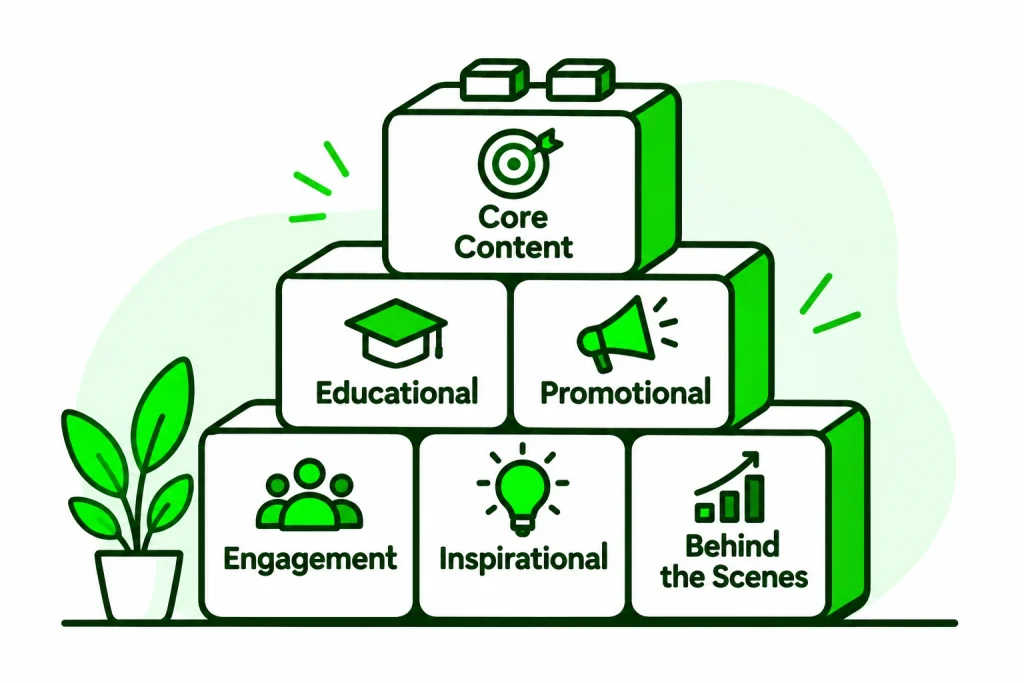
You may have heard of five content pillars described as education, inspiration, entertainment, promotion, and community.
These can be useful ways to classify the purpose of your posts. However, they are not a universal set of subject specific pillars that every brand must follow.
You can use these purposes within your actual content themes.
For example, a clothing brand’s “Styling and Outfit Inspiration” pillar could include educational sizing advice, inspiring outfit combinations, entertaining styling videos, product promotions, and community questions.
The subject remains clothing and styling while the purpose changes.
Here is how the five purposes can support your strategy:
Educational content: Helps people understand a product, service, process, or topic.
Inspirational content: Gives people ideas they can adapt to their own needs or goals.
Entertainment content: Uses relevant humor, storytelling, or creative presentation to make the subject more engaging.
Promotional content: Communicates relevant products, offers, services, or purchasing information.
Community content: Encourages meaningful participation through questions, conversations, and customer contributions.
You do not need to allocate equal space to each purpose. Choose what makes sense for your audience and business goals.

How to Turn Content Pillars Into a Social Media Content Calendar
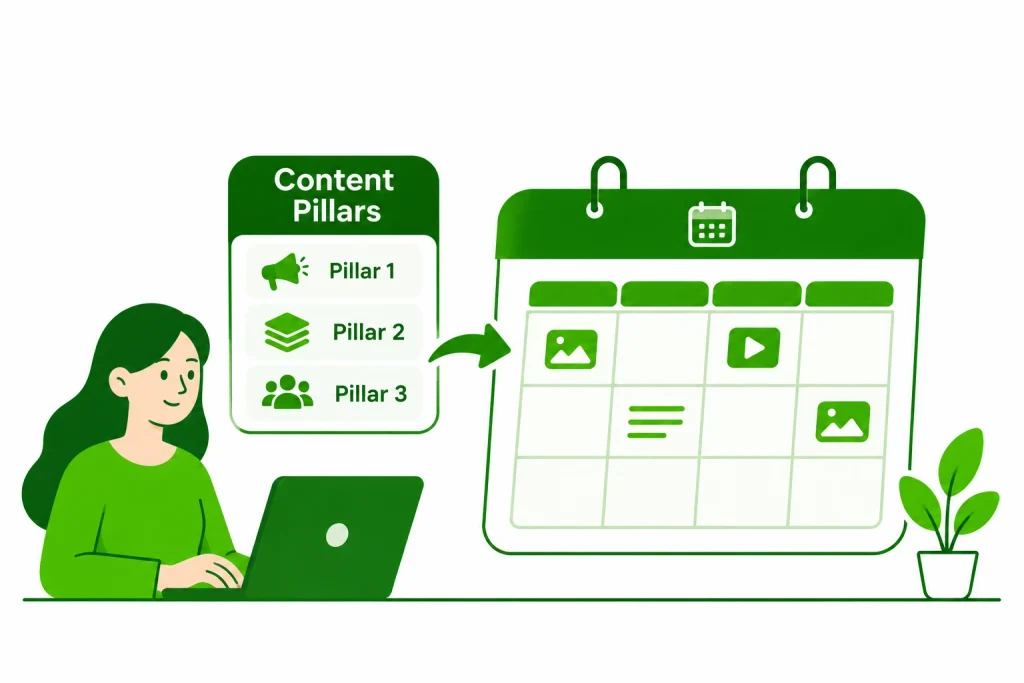
Once your pillars are defined, create a calendar that connects each planned post to a subject, format, and goal.
You do not need a complicated tool to begin. A spreadsheet can work well for a small business or marketing team.
Consider this illustrative one week plan for a Bangladeshi clothing boutique.
| Day | Content pillar | Post idea | Suggested format | Main goal |
|---|---|---|---|---|
| Sunday | Product education | Explain the fabric and features of a new item | Photo with caption | Help customers understand the product |
| Monday | Styling and inspiration | Three ways to style a panjabi | Short video | Provide useful styling ideas |
| Wednesday | Customer experience | Answer common sizing questions | Carousel | Help customers choose the right size |
| Friday | Product selection | Compare two suitable outfit options | Photo series | Support purchase decisions |
This is an example, not a recommended posting frequency for every business. Adjust the schedule to your resources and audience.
A small business may prefer fewer well prepared posts over a schedule it cannot maintain. A larger team may support a more frequent publishing plan.
Each post should offer something specific. Rather than publishing a generic message about quality, explain a product feature, demonstrate how it is used, or answer a real question.
You can also reuse a topic across multiple formats when each version adds value. A detailed sizing guide could become a carousel, a demonstration video, and a short answer to a common customer question.
Should You Use the Same Content Pillars Across Every Social Media Platform?
Your core content pillars can remain consistent across platforms when the audiences and business goals are similar. However, you should adapt the presentation to each channel.
For example, a product education pillar might become:
- A detailed Facebook post answering a customer question.
- An Instagram carousel explaining product features.
- A short video demonstrating how a product works.
- A website article containing more detailed instructions.
- A LinkedIn post discussing the product from a business or industry perspective.
The subject remains connected, but each piece of content serves the platform and the audience’s needs.
For Bangladeshi businesses, language choice also matters. Depending on your target customers, your content may work best in Bangla, English, or a natural mixture of the two. Choose the language your intended audience can understand comfortably.
You do not need an entirely different set of pillars for every platform. Start with a shared framework and create separate frameworks only when the audiences or communication goals are meaningfully different.
How to Measure Whether Your Content Pillars Are Working
Measuring results helps you determine whether your content strategy is serving its intended purpose.
Start by reviewing the goals you assigned to each pillar. Different themes may produce different types of results.
| Content goal | Metrics or evidence to review | Question to ask |
|---|---|---|
| Educate customers | Relevant comments, saves, and questions | Is the content helping people understand the subject? |
| Help customers choose | Product page visits and qualified inquiries | Are people finding the information they need? |
| Build relevant awareness | Reach and audience relevance | Is the content reaching the intended audience? |
| Improve customer experience | Support questions and feedback | Are recurring questions being resolved? |
| Support sales | Tracked inquiries, orders, and purchases | Does the content contribute to business outcomes? |
Use the metrics that are available on your selected platforms and website.
Keep paid and organic results separate when evaluating performance. A post receiving paid promotion should not automatically be compared with an unpaid post as if both received the same distribution.
Review several pieces of content before deciding whether a pillar deserves less attention. A post may perform poorly because the topic was unclear, the presentation was weak, or the distribution was limited.
Likewise, high engagement does not automatically mean a post attracts relevant customers or generates business value.
Common Mistakes to Avoid When Creating Content Pillars
Creating content pillars should make planning easier. Avoid choices that add complexity without helping your audience.
Treating Formats as Content Pillars
Categories such as videos, images, and carousels describe how content is presented. Organize your strategy around subjects instead.
Making Every Product a Separate Pillar
If several products address similar customer needs, group them under a broader theme. Create a separate pillar when there is a meaningful difference in the audience or information required.
Choosing Vague Themes
A label such as “education” may be too broad unless you define what you will teach and whom it will help.
A theme such as “product selection and buying guidance” gives your team a clearer direction.
Copying Another Brand’s Strategy
A strategy created for a large international retailer may not fit a small Bangladeshi business. Your content pillars should reflect your customers, available resources, and actual expertise.
Publishing Too Much Promotional Content
Repeated sales messages can leave important customer questions unanswered. Balance relevant offers with educational material, product demonstrations, useful explanations, and customer guidance.
Following Every Trend
A trend should support your brand’s subject matter and audience. You do not need to participate in every popular format or conversation.
Measuring Only Likes and Reactions
Engagement can be useful, but also consider meaningful inquiries, website visits, customer feedback, and tracked sales when those outcomes match your goals.
Never Reviewing the Strategy
Customer needs, products, services, and business priorities can change. Review your pillars periodically and update them when there is a genuine reason to do so.
Frequently Asked Questions
1. Can Content Pillars Help Small Businesses With Limited Marketing Budgets?
Yes, content pillars can help small businesses manage social media marketing with limited budgets by making content planning more organized. Instead of creating every post from scratch, businesses can develop multiple ideas from existing product knowledge, customer questions, and everyday operations. For example, a small online shop in Bangladesh can turn one product into a demonstration video, a care guide, and a customer question post without requiring a large production budget.
2. How Can I Find Content Pillar Ideas From Competitors?
Review competitors’ public social media posts to identify recurring subjects, frequently discussed customer problems, and questions in their comment sections. Use these observations to discover content gaps rather than copying their posts. Compare those ideas with your own customers’ needs, business expertise, and products to develop a distinctive content strategy.
3. Can I Use AI to Generate Content Pillar Ideas?
Yes, AI tools can help brainstorm content pillar ideas, generate topic clusters, and develop social media post concepts. For better results, provide details about your target audience, industry, products, business goals, and preferred language. For a Bangladeshi business, you can also request ideas relevant to local customer preferences and seasonal occasions. Review AI-generated suggestions before publishing to ensure accuracy, originality, and relevance.
4. What Is the Difference Between Content Pillars and a Content Strategy?
Content pillars define the recurring subjects a brand discusses, while a content strategy is the broader plan for reaching business goals through content. A content strategy may include audience research, positioning, publishing channels, content formats, distribution, performance measurement, and content pillars. In other words, content pillars are one component of a complete social media content strategy.
5. How Can Multiple Team Members Follow the Same Content Pillars?
Create a shared content guide that defines each pillar, its intended audience, approved subject areas, tone of voice, and examples of suitable posts. Use a shared calendar to assign topics, deadlines, formats, and review responsibilities. This approach helps marketing teams, freelance writers, and designers produce more consistent content even when several people contribute to the same social media accounts.
6. Should Personal Brands and Influencers Use Content Pillars?
Yes, personal brands and influencers can use content pillars to establish a recognizable identity and create content around their knowledge, interests, and audience expectations. A Bangladeshi creator focused on career development, for example, might cover job search guidance, workplace skills, professional communication, and career experiences. These themes provide structure while leaving room for personal stories and timely topics.
7. How Do I Know When to Add a New Content Pillar?
Consider adding a new content pillar when you identify a recurring audience need that your existing themes cannot adequately address. Other signals include a new product category, a distinct customer segment, or a change in business priorities. Before creating a separate pillar, check whether the subject can fit naturally within an existing one. A new category should improve clarity and coverage rather than simply increase the number of topics.
8. Can Content Pillars Be Used for Email Marketing and Blogs Too?
Yes, content pillars can provide a shared editorial framework for social media, blog articles, email newsletters, and other marketing channels. A single subject can be adapted to each channel’s purpose. For example, a product education theme might support a short Facebook post, a detailed website guide, and an email explaining common product questions. Adapt the depth and presentation to the audience and channel instead of duplicating the same content everywhere.
Final Thoughts
Content pillars for social media give businesses a practical way to organize their publishing strategy around meaningful subjects and customer needs.
For businesses in Bangladesh, a useful starting point is to understand the audience, identify common questions, group related subjects, and create a manageable set of recurring themes. Those themes can then guide posts, videos, product demonstrations, customer education, and relevant promotional content.
You do not need dozens of categories or a complicated marketing system. Start with a few clear pillars, build a list of useful topics for each one, and plan content that serves a specific purpose.
Review the results over time and refine your approach based on customer feedback and business goals. The most effective content strategy is one your team can maintain while consistently giving its audience a reason to pay attention.